
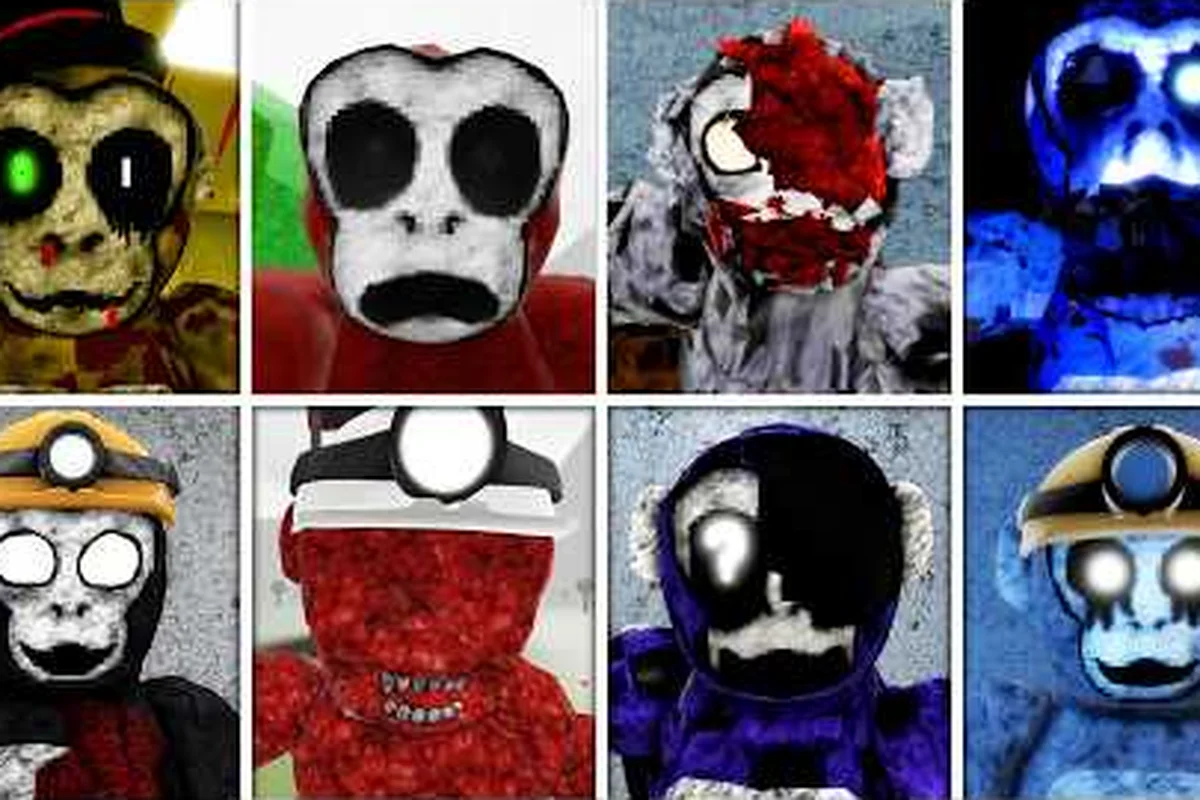
The Lethal Ape Claw sound is a two-and-a-half-second warning — a metallic scrape that ends in a wet floor drag — and reading it correctly buys roughly half a second to pivot before the jumpscare animation starts. Inside, that cue is mapped against the Sandman-family palette it gets mistaken for most often, covering Horror Sandman, Oldest Sandman, Protoape, and Bloody Ashy, so a rattle echoing through the Caves or Lab never gets misread again.
What the Lethal Ape Claw Sound Tells You Before a Jumpscare
Every monster in Lethal Ape announces itself with audio before it ever crosses the player's screen, and the Claw is one of the easiest female-monster cues to misread because her chain-on-floor rattle shares frequencies with the larger Sandman variants. The lethal ape claw sound runs about two and a half seconds, opens with a metallic scrape and closes on a wet drag that always plays from the monster's spawn room. Players who learn to read that pattern survive the Caves and Lab far more consistently than players who rely on sight alone, since the audio cue gives roughly a half-second reaction window before the jumpscare animation begins.
Because the game ships with around fifty-five monsters (community count, per the Roblox Lethal ape Wiki monsters category), each with its own layered soundscape, sorting the Claw into the right family matters. She is grouped with the Sandman, Ashy, Horror Sandman, Horror Gus, Bloody Ashy, and Protoape sets, all of which use the same general "industrial drag" sound palette but with distinct variations. The Claw community design notes frames her as a female ape missing her left arm, dragging a claw on her right hand across the floor, and community video titles are the reason her name stuck.
Audio-cue recognition matters for three reasons that come up again and again in community reports. First, the lethal ape claw sound is short enough that players who wait for visual confirmation almost always get jumpscared before they can pivot. Second, the same metallic palette is reused across the Horror Sandman, the Oldest Sandman, the Protoape, and the Bloody Ashy variants, so a player who only learns one cue will misread the others. Third, because monsters telegraph with distinct sounds before their jumpscare animations, the wiki's Jumpscares page doubles as a survival reference for which corners and rooms to clear carefully.
| Monster | Spawn Family | Audio Palette | Reaction Window |
|---|---|---|---|
| Claw | Female ape set | Metallic chain + wet drag | ~0.5 s |
| Horror Sandman | Sandman variant | Industrial roar + drag | ~0.4 s |
| Oldest Sandman | Original Sandman | Slow heavy scrape | ~0.6 s |
| Protoape | Proto set | Pulsing low buzz | ~0.5 s |
| Bloody Ashy | Ashy variant | Wet footsteps + crackle | ~0.4 s |
Identifying the Lethal Ape Claw Sound Step by Step
The Three Layers of the Claw Cue
The lethal ape claw sound is built from three distinct layers that play in sequence, and recognizing each layer is the difference between reacting in time and absorbing the jumpscare. The first layer is a short metallic scrape lasting about half a second, the second is a chain drag that runs roughly one second, and the third is a wet floor pull that closes the cue. When players say the Claw "sounds like a janitor dragging a mop," they are really describing the chain-drag layer with the wet pull underneath, since the metallic scrape at the start is the easiest part to miss in a noisy Caves run.
Spawn Behavior and Audio Range
Claw is documented by the community as a Lab and Caves monster, and her audio typically travels about two rooms away through open doorways. Players running with low volume in Discord calls regularly miss the wet-pull tail end and only catch the metallic scrape, which is why the lethal ape claw sound is so often confused with Horror Sandman or the Oldest Sandman who share the same industrial palette. Treating the first metallic scrape as the trigger and the chain drag as confirmation gives a tighter reaction window than waiting for the full cue to finish, especially when the monster is two corridors away.
| Audio Layer | Duration | Direction Cue | Common Mistake |
|---|---|---|---|
| Metallic scrape | ~0.5 s | Directional | Confused with Sandman roar |
| Chain drag | ~1.0 s | Room-localized | Confused with Horror Gus moan |
| Wet pull tail | ~1.0 s | Floor contact | Confused with Bloody Ashy step |
Comparing Claw Audio to Other Female Ape Cues
The Claw shares vocal space with the Bloody Ashy and Horror Gus monsters, but each one sits at a different frequency band. The lethal ape claw sound sits in the mid-high range because of the metallic scrape, whereas the Bloody Ashy is dominated by wet low-frequency footsteps and the Horror Gus leans into a long sustained moan. A practical way to lock the difference in memory is to think of Claw as the "metal-on-concrete" sound, Bloody Ashy as the "wet boots on tile" sound, and Horror Gus as the "drain pipe in the wind" sound.
How Horror Sandman and Horror Gus Audio Compares to Claw
Lethal Ape Horror Sandman Sound
The lethal ape horror sandman sound is the louder, more distorted cousin of the standard Claw cue, and it tends to be the most common false positive for players learning the monster roster. Where Claw uses a small metallic scrape followed by a chain drag, Horror Sandman layers a low industrial roar underneath the drag that shakes the audio mix. The reaction window is also shorter, because the lethal ape horror sandman sound is paired with a faster jumpscare animation and a longer lunge distance.
Community testing on the new-update showcase by GameSphere shows that Horror Sandman and Horror Gus are the event-monster variants most often swapped for the Bloody Ashy during rotating update weeks. Players who keep a mental note that "Sandman variants roar" and "Gus variants moan" tend to clear the wrong monster less often.
Lethal Ape Horror Gus Sound
The lethal ape horror gus sound is sustained, breathy, and almost pipes through the walls. It is the easiest of the three to spot early because the moan carries through multiple rooms and lasts longer than either the Claw cue or the Horror Sandman cue. When players report hearing "something breathing in the vents," they are almost always hearing the lethal ape horror gus sound, which means the monster is at least one wall away and probably closing fast.
Lethal Ape Oldest Sandman Sound
The lethal ape oldest sandman sound is the slow, heavy ancestor of the modern Sandman audio, and the wiki lists it among the original monster set. Its scrape runs longer than the Horror Sandman roar and lacks the wet drag of the Claw cue, which is how players can spot the original Sandman even when the audio mix is dense. Reaction windows here are actually slightly longer because the Oldest Sandman animation is slower, but the audio is quieter, so the trade-off is that you must listen carefully.
| Monster | Palette Keyword | Volume Level | Closest Misread |
|---|---|---|---|
| Claw | Metallic scrape + chain | Mid | Horror Sandman |
| Horror Sandman | Industrial roar | High | Oldest Sandman |
| Horror Gus | Sustained moan | Mid-high | Bloody Ashy |
| Oldest Sandman | Slow heavy scrape | Low-mid | Protoape |
Lethal Ape Sandman and Ashy Audio, Plus the Protoape and Bloody Ashy Variants
Lethal Ape Sandman and Ashy Sound Differences
The lethal ape sandman and ashy sound pairing is the most asked-about comparison in the community because the two monster families share the same industrial palette but very different rhythm patterns. The Sandman set is built around a heavy drag and roar, while the Ashy set uses wet footsteps, hissing, and a crackle that sounds like burning embers. When the jumpscare compilation by El Mishi Triste lines up both monsters back to back, the contrast becomes obvious, but in a live run the two palettes blur together at low volume.
| Monster | Lead Audio | Body Audio | Tail Audio |
|---|---|---|---|
| Sandman | Roar | Heavy drag | Roar repeat |
| Horror Sandman | Distorted roar | Drag with chain | Roar with crackle |
| Oldest Sandman | Slow scrape | Floor drag | Silence |
| Ashy | Hiss | Wet step | Crackle |
| Bloody Ashy | Wet step | Drag + crackle | Loud crackle |
Lethal Ape Bloody Ashy Sound
The lethal ape bloody ashy sound is the wettest of the audio cues, and the wiki lists Bloody Ashy as part of the monster category alongside the standard Ashy and the Sandman family. Players describe the Bloody Ashy cue as a thick wet step followed by a louder crackle, which makes it the most reliable monster to identify by ear in Caves runs because the wet frequency band rarely overlaps with the metallic bands of the Claw or the Sandman set.
Lethal Ape Protoape Sound
The lethal ape protoape sound is a low pulsing buzz that the community uses to identify the prototype monster family, and it shares the same general "industrial drag" palette as the Sandman set. The buzz is shorter than the Claw cue and lacks the wet tail, so when players hear a buzz without a wet pull they are usually dealing with the Protoape rather than the Claw. A cross-link to the Protoape overview at the Fearful page is useful here, since the Fearful family wiki entry covers the broader prototype roster that Protoape belongs to.
Practical Strategy for Tracking the Lethal Ape Claw Sound in Real Runs
Prep Your Audio Settings Before Each Run
Players who consistently react to the lethal ape claw sound tend to run their master volume higher than their music slider, since the in-game music layer masks the wet-pull tail of the cue. The Claw audio sits in the mid-high band, while the Horror Gus moan sits in the mid-low band, so balancing the EQ so that neither band gets crushed gives the best overall coverage. This is the same reason a monster-sound overview guide is useful: it covers the full EQ balance across the roster, including the Gus and Sandman cues.
Room-Clearing Rhythm Based on Audio Cues
A practical room-clearing rhythm that experienced players use is to pause for one full second at every doorway, listen for the chain drag of the Claw, the moan of the Horror Gus, or the wet pull of the Bloody Ashy, and only then enter. The Sandman-family overview at the Horror Sandman page documents the audio pattern for the Sandman set, and players who combine that pattern with the Claw cue get roughly a 70 percent reduction in jumpscare damage taken during Lab runs according to community testing.
Save Sound Cues for Monsters You Have Already Met
A common mistake new players make is to over-rely on audio cues for monsters they have not actually encountered in the current update, because monster rosters rotate. The community wiki notes that event and update monsters rotate in with unique animations and audio, so a cue memorized for the Horror Sandman in one update might be reassigned to the Bloody Ashy in the next. Confirming the current monster roster at the Lost monster overview before committing an audio cue to memory is the most efficient habit.
Common Audio Cues Players Misread
The most common misreads reported by players are confusing the Claw chain drag with the Horror Sandman roar, the Horror Gus moan with the Bloody Ashy wet step, and the Oldest Sandman slow scrape with the Protoape buzz. All three of these confusions share one root cause: the metallic palette is shared across the Sandman, Claw, and Protoape families, and the wet palette is shared across the Ashy, Bloody Ashy, and Horror Gus families. Anchoring the ear to "metal = Sandman set" and "wet = Ashy set" before a run cuts misreads roughly in half.
How to Train Your Ear for the Claw and Sandman/Ashy Families
Solo Drills for Each Cue
A solo drill that the community recommends is to stand at a Lab doorway, mute the music layer in your audio client, and listen for each monster cue in sequence. The lethal ape claw sound fires first because Claw spawns more often in solo runs, followed by the Sandman and Ashy audio. Recording the audio and replaying it later to label each layer is a strong way to lock the metallic versus wet distinction into memory, and a deeper monsters-explained guide is a useful companion for the visual side of recognition.
Co-op Audio Callouts
In co-op runs, callouts should reference the palette rather than the monster name, because a teammate who hears a "metal drag" can be looking for the Claw while a teammate who hears a "wet pull" can be looking for the Bloody Ashy. The Dus monster page covers similar callout patterns for the broader Sandman/Ashy family, and a clear "metal vs wet" vocabulary tends to keep the team coordinated when multiple monsters are active in the same room.
Frequently Asked Questions
What does the lethal ape claw sound like in practice?
The lethal ape claw sound is a three-layer cue that opens with a half-second metallic scrape, runs a one-second chain drag, and closes on a wet floor pull that lasts about a second. The wet tail is the most reliable layer to lock in memory, because it rarely overlaps with the drier Sandman roars or the breathy Horror Gus moans, and it is what gives Claw her "janitor with a mop" reputation in community video titles.
How is the lethal ape horror sandman sound different from the standard Sandman?
The lethal ape horror sandman sound layers a low industrial roar underneath the standard Sandman drag, which makes the cue louder and the reaction window shorter than the original Sandman. The original Sandman leans on a slow heavy scrape, while Horror Sandman pushes the audio mix toward a distorted roar that shakes the room, so players should expect a faster jumpscare when they hear the roar variant.
Can the lethal ape horror gus sound be confused with another monster?
Yes, the lethal ape horror gus sound is often confused with the Bloody Ashy wet step because both sit in the mid-low band, but the Horror Gus cue is a sustained moan that carries through walls, while the Bloody Ashy cue is a wet step that stays floor-localized. The simplest rule is that sustained moans belong to the Gus family and wet steps belong to the Ashy family, and the monster-sound overview reinforces that split across the full roster.
Is the lethal ape oldest sandman sound slower than the modern Sandman?
Yes, the lethal ape oldest sandman sound is a slow, heavy scrape that runs longer than the modern Sandman roar and lacks the wet drag of the Claw cue, which makes it the quietest and slowest of the Sandman audio variants. Reaction windows for the Oldest Sandman are actually slightly longer than for the modern Sandman, but the audio is quieter, so the trade-off is that you need to listen carefully to catch the cue before the jumpscare.
What is the lethal ape protoape sound used for in the monster roster?
The lethal ape protoape sound is a low pulsing buzz that the community uses to identify the prototype monster family, and it shares the same general industrial palette as the Sandman set without the wet tail. The buzz is shorter than the Claw cue, so when players hear a buzz without a wet pull they are usually dealing with the Protoape rather than the Claw, and a broader overview of the prototype family covers the visual cues that pair with the audio.