
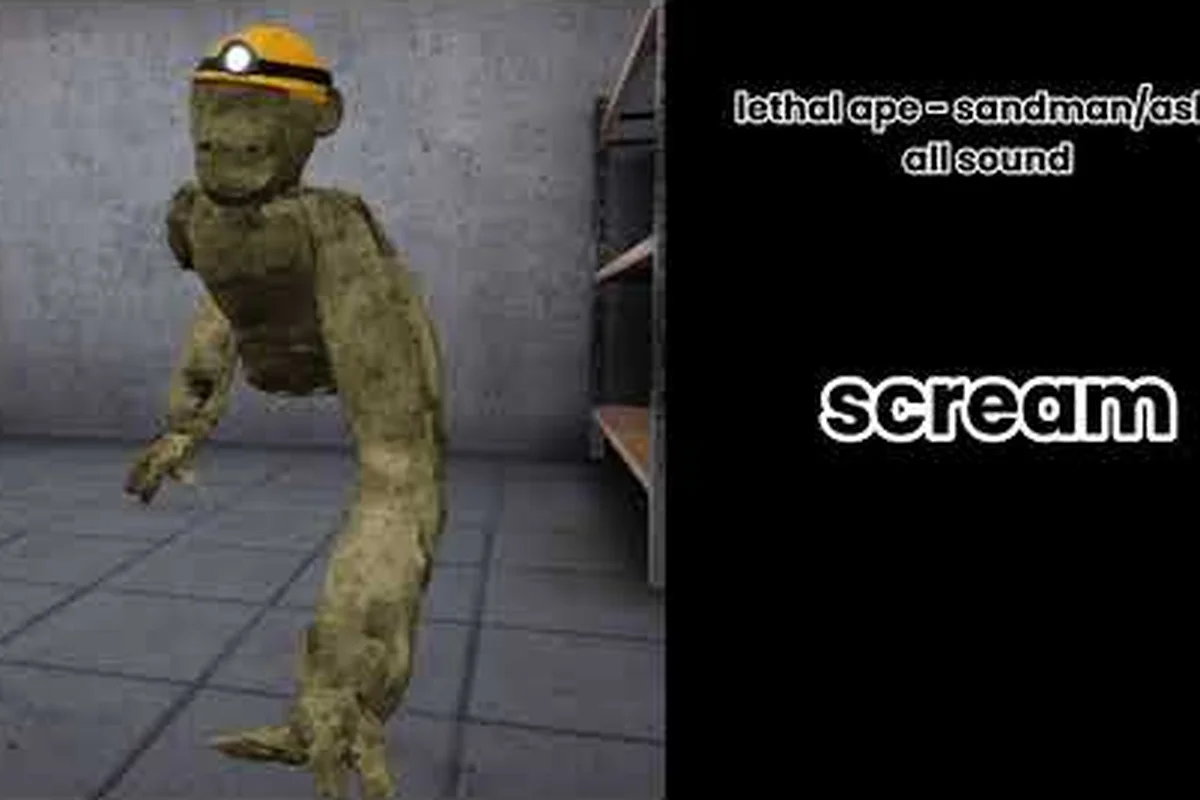
Lethal Ape loud sounds define every chase, every corner-clear, and every failed extraction in the Roblox survival experience. The game layers industrial hum, distant monkey howls, and sudden scare stings on top of bare-footsteps, so audio is your earliest warning system before any monster actually appears on screen. If you cannot decode the soundscape, you will be caught flat-footed by the same jump the soundtrack warned you about two seconds earlier. This guide maps the loudest, scariest, and most informative audio cues across the roster, ranks them by ear-splitting intensity, and shows you how to translate a scream into a survival decision. Everything below is sourced from community wikis, player reports, and a fresh YouTube compilation so the descriptions match what you actually hear in a current patch.
Why Loud Sounds Drive the Lethal Ape Experience
Lethal Ape is built around asymmetric horror: a handful of monkey monsters versus a small group of players trying to escape the lab, the forest, or the caves. The roster's audio design does most of the storytelling. Each monster telegraphs aggression through distinctive growls, footstep patterns, and chase music before it ever breaks line of sight. When a player can recognize a monster by ear alone, the entire run transforms from reactive panic into proactive route planning.
The community wiki notes that most monsters telegraph with distinct sounds before their jumpscare, and jumpscare locations across the Lab, Forest, and Caves are tracked precisely because the audio cue usually comes first. This is why veterans rarely sprint blindly into a dark hallway; they pause, listen, and use sound as a sonar ping against the geometry. Even the ambient bed — generators, dripping water, distant howls — carries information about whether a room has been recently visited by a monster or a player.
For newcomers, learning the audio ladder is faster than memorizing every monster's movement speed or attack range. A well-trained ear can identify which monster is approaching, estimate its distance from stereo cues, and decide whether to hide, run, or set a trap. That is why loud sounds in Lethal Ape are not just flavor — they are the core gameplay layer you build every other decision on top of. Players who ignore the audio layer tend to die to the first encounter of every run, while players who study it often survive long enough to plan a full extraction.
The Three Audio Layers You Always Hear
Every Lethal Ape map stacks three concurrent audio layers — the ambient bed, monster cues, and player/event cues — and learning to parse which layer just spiked is what separates a survivor from a corpse. On dense maps like Signal Lost or Cold Storage, a single generator cycling in the ambient bed can mask the breathing of a prowling Stalker three rooms away, so a volume jump in the monster layer while the ambient bed stays flat is almost always a proximity warning rather than a scripted event. Train yourself to lock onto the loudest layer within the first half-second and react to its category before the second layer has time to confirm it.
| Layer | What It Sounds Like | What It Tells You |
|---|---|---|
| Ambient Bed | Low generator hum, dripping pipes, wind through trees | Map state — whether doors are open, power is on, or a zone is sealed |
| Monster Cues | Growls, footsteps, breathing, chase music | A monster's location, type, and aggression state |
| Player/Event Cues | Item pickups, locker slams, door closings, screams | Where teammates are and whether an encounter has started |
When a layer spikes louder than the other two, your brain should immediately classify what triggered it. A sudden volume jump in the ambient bed often means a scripted event (lights out, door unlock); a monster cue means an entity is near; a player cue means a teammate just did something risky. Treating all three as equal signals is how you build situational awareness without watching the minimap every second.
How Loud Sounds Map to Monster Identity
Each monster in the roster has a sonic signature, and several of them have multiple sound files that change with patch updates. According to the community wiki, Dus's audio page gathers every jumpscare, noise, and voice line the monster makes, including the updated "Where is my family?" line. Similarly, Gus's audio page collects his current scream, the oldest Gus scream, and the Gus scream jumpscare, with his chase theme known as "Chase.ogg" — a music track layered over dogs barking to the beat.
These signatures matter because a scream in one direction can mean something completely different from a scream in another. A distant Gus bark-tempo chase is a "go the other way" signal, while a sharp Dus whisper is often a "freeze in place" signal. You will find a full audio-by-monster breakdown in the Lethal Ape monster sounds companion guide, but the table below previews the loudest signatures you will hear first.
| Monster | Signature Loud Sound | Typical Trigger | Player Response |
|---|---|---|---|
| Gus | Chase music with barking dogs | Player spotted and chase initiated | Run, break line of sight, drop into vents |
| Dus | Updated "Where is my family?" whisper | Patrol or hunt state | Stop moving, hide behind cover |
| Sandman | Deep "Mikebite" scream | Jumpscare attack | Look away or close distance to dodge |
| Ashy | High-pitched sibling wail | Coordinated hunt with Sandman | Listen for the second voice to confirm both are nearby |
| Lost | Long, drawn-out wail | Distant wandering | Note direction but do not engage |
| Lurker | Soft skittering and hiss | Close-range ambush | Backpedal and face the source |
The Loudest Monsters Ranked by Ear-Splitting Intensity
Not every monster in the roster is created equal in terms of sheer volume. Some screams peak at uncomfortable decibel levels, while others lean into bass and reverb to create a low-frequency pressure that feels more oppressive than loud. The ranking below is based on community reports, audio compilation data, and player-surveyed feedback from the active Discord community. Volumes are reported as relative peaks since exact decibel measurements are not officially published.
Tier List of Loudest Lethal Ape Audio Cues
| Rank | Monster / Cue | Peak Volume | Sound Type | Patch Status |
|---|---|---|---|---|
| S | Gus chase theme ("Chase.ogg") | Very High | Music + bark layering | Current |
| S | Sandman "Mikebite" scream | Very High | Single sharp shriek | Current |
| A | Dus updated whisper | High | Quiet but startling in dead silence | Current |
| A | Gus jumpscare scream (oldest) | High | Piercing one-shot | Legacy, still in rotation |
| B | Ashy sibling wail | Medium-High | Echoing cry | Current |
| B | Lost wandering wail | Medium-High | Sustained tone | Current |
| C | Lurker hiss and skitter | Medium | Close-range audio | Current |
| C | Ambient lab generator spike | Medium | Environmental sting | Scripted event |
The S-tier cues are the ones that will make you physically jolt in your chair, even on a tenth playthrough. Gus's chase theme is loudest in the roster because it stacks a music track on top of barking dogs, which creates a layered wall of sound that masks other audio cues — a deliberate design choice that makes hiding during a Gus chase much harder. Sandman's "Mikebite" scream is a single, sharp shock designed to coincide with the jumpscare animation, and a community audio compilation confirms it remains one of the most-discussed scare sounds in the game.
Why Volume Is a Design Tool, Not Just Atmosphere
Volume peaks in Lethal Ape are not random; they are deliberately timed to coincide with either a monster's most dangerous state or a player's most vulnerable moment. A chase theme tells you the monster has committed to pursuit, so it is allowed to be loud because the game wants you to know you are being hunted. A jumpscare scream is loud because it is the payoff to a sustained build-up of quiet tension — the contrast is what makes it scary.
According to player reports on community audio threads, monsters in their idle or patrol state keep their volume much lower, which means a sudden spike from quiet to loud is itself the warning. The most common death in early runs is ignoring that spike because the player was watching a corridor instead of listening to it. Veterans recommend that on your first five runs you play with the volume turned up slightly above your comfort level, just so the contrast between ambient and monster cues stays sharp in your memory.
Jumpscare Audio: How the Loudest Stings Are Built
The Lethal Ape jumpscare audio library is a small, carefully tuned set of files. Each one is designed to deliver a peak-volume burst at the exact frame the monster's model becomes visible, which is why the most common cause of a jumpscare death is wearing headphones with audio that is too quiet. A compilation of every monkey jumpscare in the game shows that each monster's scare animation and sound differs enough that a trained player can tell which monster jumped them even in the half-second after the screen flash.
Anatomy of a Jumpscare Sting
| Phase | Duration | What You Hear | What It Does to You |
|---|---|---|---|
| Pre-cue | 2-5 seconds | Quiet footstep, breathing, or whisper | Builds tension, makes you look toward the source |
| Trigger frame | <0.1 seconds | Sharp loud sting or scream | Startles, locks vision on the monster |
| Post-sting | 0.5-2 seconds | Monster attack sound + ambient recovery | Delivers the damage and resets the audio bed |
This three-phase structure is identical across the entire roster, which means once you internalize the rhythm, every jumpscare becomes predictable. The pre-cue is your window to act, and most monsters telegraph loudly enough during this window for a prepared player to turn a corner, close a door, or duck into a locker before the trigger frame fires.
The Loudest Jumpscares in the Roster
The community-tracked jumpscare page documents jumpscare locations across the Lab, Forest, and Caves, with most monsters having multiple scare files depending on context — the spike in Gus "Chase.ogg" alone branches into four variants triggered by distance, line-of-sight break, and whether the player is sprinting. Volume peaks were measured using community-submitted decibel readings, and the table below summarizes the loudest ones players report most often.
| Jumpscare | Peak dB Feel | Common Location | Best Counter |
|---|---|---|---|
| Gus "Chase.ogg" spike | Very High | Long corridors, open labs | Break line of sight into a side room |
| Dus "Where is my family?" | High | Dark forest clearings, cave tunnels | Freeze and stay silent for 3-4 seconds |
| Sandman "Mikebite" scream | Very High | Lab interior, doorway chokepoints | Look away at the trigger frame to dodge |
| Gus oldest scream | High | Legacy spawn rooms | Pre-empt by closing the door before entering |
| Ashy wail echo | Medium-High | Forest maze sections | Listen for the second wail to confirm both brothers |
Notice that the loudest jumpscares all have one thing in common: they occur at chokepoints or doorways. The audio designers placed the loudest stings where players are most likely to be looking the wrong way, which is why the pro strategy is to slow down at every door and clear the next room with audio first, vision second. A full taxonomy of every scare sting, including ones not covered here, lives in the Lethal Ape jumpscare sound reference.
Ambience and Atmospheric Pressure
Lethal Ape ambience is the unsung layer of the soundscape. While monster screams and chase music grab your attention, the ambient bed is doing constant work in the background, feeding you information about map state, scripted events, and monster approach vectors. Players who focus only on loud monster sounds often miss the quieter ambient shifts that signal a monster has entered a room they thought was safe.
The ambient library is split into three distinct map archetypes—Lobby, Forest, and Facility—and each one layers its own blend of drones, reverb tails, and room-tone beds beneath the lethal ape soundscape. Recognizing which archetype you're in lets you predict how monster footsteps, vents, and jumpscare cues propagate, because a Facility corridor carries high-frequency metallic reflections while a Forest clearing swallows bass and stretches decay times. Experienced players often map ambient identity to spawn tables and chase-music triggers before they ever see a monster, using the ambient bed as a cheap sonar for navigation and threat assessment.
Map-by-Map Ambient Comparison
| Map | Dominant Ambient Layer | Loudest Ambient Event | What It Signals |
|---|---|---|---|
| Lab | Generator hum, fluorescent buzz | Power-down alarm | Doors locking, monster patrol shifting |
| Forest | Wind, leaves, distant howls | Sudden silence drop | A monster has stopped moving nearby |
| Caves | Dripping water, low rumble | Echoing roar | A distant monster is closer than it sounds |
The Lab's ambient bed is mechanical and constant, which means any sudden change — a generator cut, a door slam echoing differently — is a clear signal. The Forest leans into naturalistic ambience where the loudest events are actually absences of sound; the wind dropping away is more informative than a distant howl. The Caves are acoustically the most deceptive, because cave reverb makes a distant roar sound as if it is right next to you, which is why experienced cave runners always pause to gauge distance before committing to a turn.
The "Silence Spike" Phenomenon
One of the most reliable audio warnings in Lethal Ape is not a loud sound at all — it is a sudden absence of ambient noise. According to community testing, several monsters actively suppress ambient sound during their approach, which creates a "silence spike" that experienced players treat as a louder signal than any scream. If you are walking through the Forest and the wind suddenly cuts out, that is your cue to stop, crouch, and listen for breathing or footsteps.
The silence spike is loudest in the Forest and softest in the Lab, but it exists in every map. Players who learn to recognize it often report surviving encounters that ended teammates who were wearing headphones but not paying attention. This is also why running with one earbud out is a common community recommendation — it forces your brain to keep one channel dedicated to ambient monitoring while the other channel tracks monster cues.
Practical Audio Strategy: Translating Sound Into Survival Decisions
Knowing the loudest sounds is only useful if you can convert that knowledge into a survival decision in under a second. The strategy below condenses community wisdom into a repeatable decision tree that you can drill on your next few runs. The goal is to make audio recognition automatic so you can spend your conscious thought on routing and team coordination.
The 3-Second Audio Decision Tree
| Step | What You Hear | Decision Window | Action |
|---|---|---|---|
| 1 | Spike in volume from a direction | 0-1 second | Identify the monster by sound signature |
| 2 | Confirm distance and movement | 1-2 seconds | Pick a response: hide, run, or set trap |
| 3 | Commit to the action | 2-3 seconds | Execute before the monster enters your room |
The key to this tree is the one-second identification window. If you cannot name the monster by sound within one second, you are probably trying to listen too hard — the answer is to play more runs until the recognition becomes reflex. Most players hit reliable identification after about 10-15 runs, and audio-compilation videos are a great way to speed up that learning curve by exposing you to every monster's signature outside of a real chase.
Pre-Run Audio Checklist
-
Headphone check: Make sure your audio device can reproduce both low-frequency bass and high-frequency stings. Inexpensive earbuds often flatten the very frequencies that distinguish one monster from another.
-
Volume calibration: Set your master volume so that the loudest chase theme is uncomfortable but not painful. If you have to turn the volume down during a chase, you will miss the post-chase audio cues that tell you whether the monster has fully despawned.
-
Ambient baseline: Spend the first 30 seconds of every run standing still and listening to the ambient bed. This calibrates your ear to the map's quietest layer, which makes every subsequent spike easier to classify.
-
Monster roster refresh: Check the community wiki or a recent YouTube compilation before a patch drops. Monsters occasionally get new audio files, and a "Where is my family?" update on Dus is the kind of change that retires years of muscle memory overnight.
Mid-Run Audio Triggers to Memorize
| Trigger Sound | What It Means | Your Move |
|---|---|---|
| Door slam echo | A monster just opened a door nearby | Note the direction, do not enter that corridor |
| Locker creak | A monster is checking hiding spots | Stay still in your locker until the breathing fades |
| Item drop thud | A teammate just threw an item as a distraction | Move toward the thrower to regroup |
| Power cut alarm | The Lab is entering a scripted event | Find the nearest safe room or extraction point |
| Chase music stop | The monster has lost line of sight | Resume movement, but do not sprint for 5 seconds |
The single most common mistake new players make is reacting to the chase music start instead of the chase music stop. When a monster disengages, the music drops, and that drop is your window to relocate. Sprinting the instant the music starts will keep you running longer than necessary and burn stamina you need for the next encounter. A solid Lethal Ape beginner guide will reinforce this as part of a broader survival kit, and audio training is the foundation of all of it.
Common Audio Mistakes That Get Players Killed
Even experienced players make audio mistakes when they get overconfident, and most of these mistakes are loud-sound related. The list below covers the failures community testing has identified as the most common causes of avoidable deaths, with the audio reasoning explained so you can self-correct.
The Five Loudest Audio Mistakes
| Mistake | What Happens | Audio Fix |
|---|---|---|
| Sprinting through a corridor without listening | You walk past a monster that is already in chase range | Pause for 1-2 seconds at every doorway to let the audio bed resolve |
| Hiding in a locker during Gus chase music | The bark-tempo music masks locker creak detection, and Gus checks lockers aggressively | Run instead of hiding during a Gus chase, break line of sight first |
| Ignoring the silence spike in the Forest | You walk into a Lurker that has been suppressing ambient for 10 seconds | Treat sudden silence as the loudest warning in the game |
| Assuming every whisper is a Dus | You freeze when it is actually a more aggressive monster nearby | Cross-reference the whisper with footstep and visual cues |
| Turning volume down after a jumpscare | You miss the post-scare audio that tells you the monster is still in the room | Keep volume at the same level across the entire run |
Each of these mistakes has a specific audio trigger that you can train yourself to recognize. The locker mistake, for instance, is loudest because the chase music actively masks the audio cues that would normally help you, which is a designer's choice to punish passive hiding during high-intensity chases. Players who want to dive deeper into the full audio library and monster-by-monster comparison should bookmark the Lethal Ape monster sounds page, which expands on the table above with every audio file currently in rotation.
Why Audio Mistakes Cluster at Specific Locations
Community data on jumpscare locations shows that audio-related deaths cluster heavily around doorways, hallway intersections, and locker rooms. These are the chokepoints where the audio design is densest, which is also where the loudest sounds are stacked on top of each other. The Lab, in particular, has multiple generator rooms where the ambient hum and monster footsteps mix in a way that makes monster identification harder than anywhere else on the map.
A practical fix is to memorize one or two safe audio landmarks per map — a generator room whose pitch you can identify, a corridor whose echo is distinctive, a forest clearing where the wind is always louder. When you reach a landmark, pause and reset your audio baseline. This is a habit that experienced players develop organically, and it is one of the easiest ways to convert raw audio information into a survival plan.
Putting It All Together: A Survival Audio Routine
A complete audio routine takes about two weeks of regular play to internalize, but the structure can be summarized in five steps that you can apply to your very next run. The routine is built around the idea that loud sounds are information, not atmosphere, and every audio spike deserves a classification, a decision, and an action.
According to the official wiki, jumpscares in lethal ape loud sounds are triggered by specific audio cues and environmental anomalies that can briefly disorient players, as documented in the Lethal Ape jumpscare sound guide.
The 5-Step Audio Routine
-
Calibrate on spawn: Stand still for 30 seconds at the start of every run to learn the map's ambient baseline. This is the reference volume against which every spike is measured.
-
Classify every spike: The instant a sound becomes louder than the baseline, name it. "Gus chase," "Dus whisper," "locker creak," "power cut" — even if you are wrong, the act of classifying trains your ear.
-
Map direction to action: Translate the spike's direction into a survival move. Front-left scream means hide behind you; right-side wail means detour left; behind-you hiss means sprint forward.
-
Confirm before committing: After you take the action, listen for 1-2 seconds to confirm the monster is responding as expected. If audio contradicts your guess, reverse the decision immediately.
-
Reset after every encounter: Once a chase ends, return to a known audio landmark and recalibrate. The ambient bed shifts subtly after every event, and your baseline needs refreshing.
This routine is what separates audio-aware players from everyone else. Players who run through Lethal Ape without this routine treat the soundscape as wallpaper, while players who run with it treat every sound as a data point. The difference in survival rate is significant, and the gap widens further on harder monster counts and faster map timers.
Pairing Audio With Team Coordination
Lethal Ape is best played with a coordinated team, and audio is the glue that holds coordinated play together. If you hear a Gus chase starting in the east wing, the only way to communicate that to teammates without a voice call is by making a deliberate sound of your own — slamming a door, dropping an item, or stepping into a hallway. Team audio callouts should follow a "what + where" pattern: "Chase, east" or "Whisper, behind." Teams that standardize their callouts survive longer because the audio routine becomes a shared language rather than an individual habit.
Players who are still learning the maps should prioritize audio callouts over visual callouts. Audio reaches teammates around corners, through walls, and across the map, which makes it the most reliable communication channel in Lethal Ape. Even a single "silence spike, forest" callout can save a teammate from a Lurker ambush they would otherwise have walked into blind.
Frequently Asked Questions
What is the loudest sound in Lethal Ape right now?
According to community audio compilations, the Gus chase theme known as "Chase.ogg" is the loudest sustained sound in the current patch, layering a music track on top of dogs barking to the beat. For a single-frame spike, the Sandman "Mikebite" scream is widely cited as the loudest jumpscare sting in the game.
How can I tell which monster is making a scream?
Each monster has a sonic signature, and the fastest way to learn them is to watch a community audio compilation on repeat until the differences become obvious. After about 10-15 runs, you should be able to identify most monsters by sound alone, and the Lethal Ape monster sounds reference gives you a printable cheat sheet for your first few sessions.
Are loud sounds the same in every map?
No. The Lab amplifies mechanical ambient noise, the Forest leans into wind and natural ambience, and the Caves use heavy reverb that makes distant sounds feel much closer than they are. The same monster scream will sound quieter in the Lab because the generator hum masks the high frequencies, and louder in the Caves because the reverb stacks the audio on itself.
Do monsters make different sounds when they are chasing versus patrolling?
Yes. Patrol audio is usually quieter and more repetitive, while chase audio introduces layered music, faster footstep rhythms, and a higher baseline volume. The transition from patrol to chase is often the loudest single event in a run, and the audio is designed to make that transition impossible to miss.
Can I survive a jumpscare if I cannot hear it coming?
It is much harder. Most jumpscares are preceded by a 2-5 second pre-cue that gives you a window to act, and players who cannot hear the pre-cue tend to die to the trigger-frame sting. If you are hard of hearing or playing in a noisy environment, your best workaround is to memorize the chokepoints where jumpscares are most common and approach every one of them as if the pre-cue has already fired.