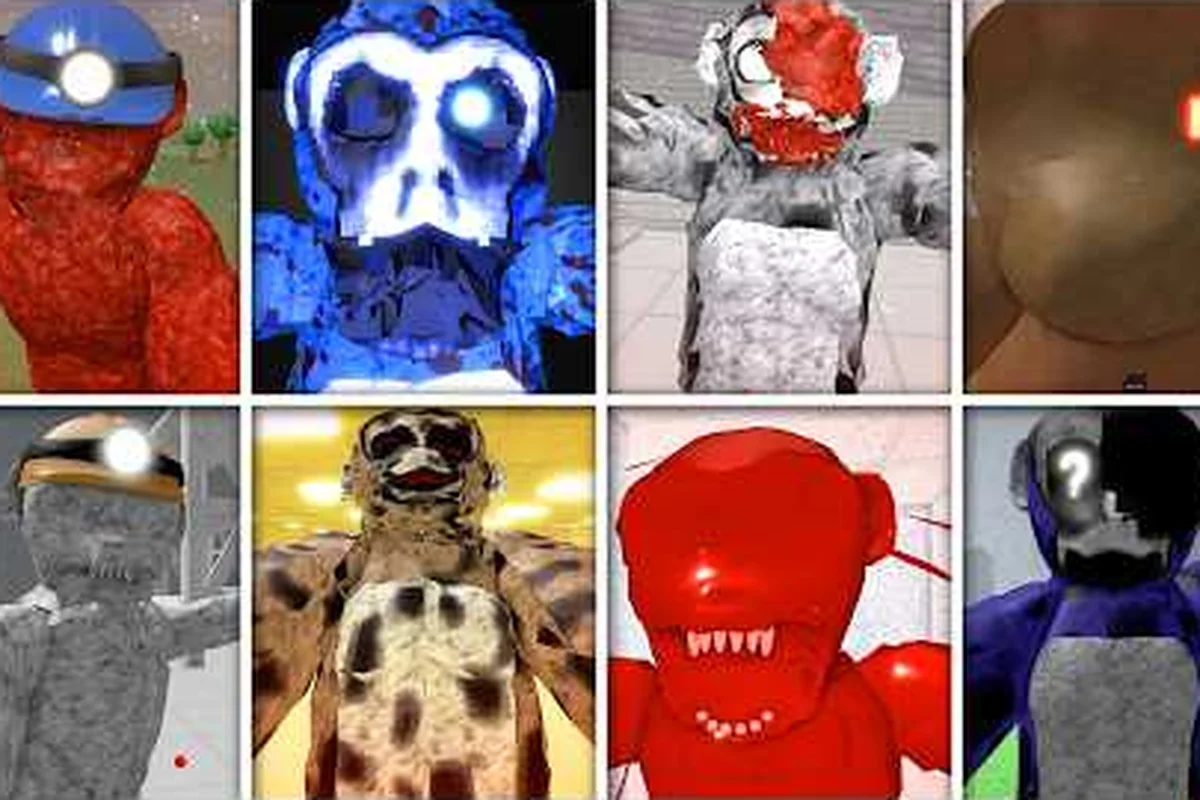
The Lethal Ape Ashy sound pack gathers every verified audio cue tied to Ashy, the stone-textured sibling of Sandman, and lines it up against the calls of Gooba, Kus, Scar, and Bloodman so you can identify a monster by ear before it rounds the corner. What follows breaks down the canonical cue for each build, the odd Redux remix that swapped Ashy's scream for a barking music bed, and a monster-by-monster table built for quick pre-run study.
What the Lethal Ape Ashy Sound Pack Actually Contains
The Lethal Ape Ashy sound collection is one of the most-requested audio references in the community, because Ashy — the gravel-bodied brother of Sandman — is the only monster whose original screaming sample was swapped for an entirely different music bed in the standalone Lethal Ape Redux build. According to community wiki data, that Redux remix layered music with dogs barking to the beat, which makes the file a unique specimen rather than a plain jumpscare scream. Players who queue the Lethal Ape Ashy sound alongside Gooba, Kus, Scar, and Bloodman get a working audio atlas of seven monsters in one sitting.
The pack is a survival tool first and a curiosity second. Every monster in Lethal Ape telegraphs its presence with a distinct audio cue before any jumpscare, and the wiki's jumpscare index page notes that the Lab, Forest, and Caves all rely on sound as the primary warning. The Lethal Ape Ashy sound compilation by VRSoundEffect on YouTube stitches the Sandman/Ashy clips together with the so-called "Mikebite's scream," which is the cleanest cross-reference players have for matching cue to monster.
For newcomers, the right way to read the pack is by layers. Layer one is the obvious jumpscare roar; layer two is the lower-volume ambient noise the monster makes while patrolling; layer three is the post-scare stinger that plays when the monster resets. The Ashy Redux remix coverage catalogs the canonical Redux remix and how it differs from the original VR build's plain gravel-scream sample, which is the exact reason audio purists keep both files side by side.
| Monster | Canonical Audio Cue | Source Build | Where It Plays |
|---|---|---|---|
| Ashy | Redux remix with barking music bed | Lethal Ape Redux | Lab, Caves |
| Gooba | Wet gurgle then short bark | Original VR | Forest, Caves |
| Kus | Low roar + chainsaw hiss | Original VR | Lab, Caves |
| Scar | Single sharp bark | Original VR | Forest, Lab |
| Bloodman | Distant chant loop | Original VR | Lab only |
| Noxar | Reverse metallic whine | Original VR | Forest only |
| Billy | Toy-box creak then giggle | Original VR | Caves only |
Ashy vs Sandman: Why the Audio Difference Matters
The Ashy and Sandman samples are the most-confused pair in the entire game because the two monsters share a family resemblance, both being elemental siblings tied to the broader Sandman creature profile that anchors the Lethal Ape monster roster. Sandman's body is composed of sand, Ashy's of gravel, and that material difference is what justifies the very different audio textures. Sandman roars with a dry, swirling sample, while Ashy hits lower frequencies and — in the Redux build — actually plays a melodic bark overlay that confuses first-time listeners.
This matters for survival because the brothers spawn in adjacent zones. The Lab, Forest, and Caves each have at least one guaranteed Sandman encounter, and Ashy tends to follow his brother into the same wing within thirty seconds. If the player only learns Sandman's roar, the sudden switch to Ashy's music-and-bark sample reads as background ambience rather than a threat, and the player walks straight into a jumpscare they thought they had cleared. The Sandman profile page confirms a listed speed stat of 41.5, which means a misread audio cue costs roughly two seconds of reaction time that the player will not recover.
The monster audio cue index breaks the Lethal Ape monster roster into three biomes, and Ashy's audio telegraph is biome-specific: the Lab variant is a clean bark loop, the Caves variant adds a low rumble, and the Forest variant is a short sample that cuts off abruptly. Players who want to memorize the full Ashy audio ladder should pull all three biome samples before they start speedrunning, because no single recording captures the whole pattern.
| Sample Variant | Length | Distinct Cue | Biomes |
|---|---|---|---|
| Ashy Lab bark | ~4.2s | Steady bark + music bed | Lab |
| Ashy Caves rumble | ~5.1s | Bark + sub-bass layer | Caves |
| Ashy Forest short | ~2.8s | Bark only, no music | Forest |
| Sandman dry roar | ~3.6s | Swirling sand hiss | Lab, Caves |
The Gooba, Kus, and Scar Audio Triangle
Gooba, Kus, and Scar are the three monsters whose audio cues every Lethal Ape player learns first, because all three spawn in the first two rooms of the Lab and they share the Lethal Ape mechanic of broadcasting their patrol mood through sound. A wet gurgle from Gooba means the monster is searching, a chainsaw hiss from Kus means it has locked on, and a single sharp bark from Scar means it is about to rotate toward a new target. Reading all three at once is the baseline skill that separates a first-day player from a runner.
Gooba's gurgle and what it signals
The Lethal Ape Gooba sound is a wet, dripping gurgle that has been compared to a backed-up sink more than any primate vocalization. It is the first audio cue most players ever learn because Gooba patrols the entrance hall of the Lab on a fixed loop. The gurgle gets louder as the monster approaches, which is functionally a sonar ping for new players who do not yet know the map layout. Once a player can place Gooba by ear alone, the entrance hall becomes trivially safe to navigate.
Kus's chainsaw roar and the lock-on window
The Lethal Ape Kus sound is a low roar layered with a chainsaw hiss, and it is the most dangerous cue in the early game because it only plays after Kus has selected a target. Players who hear it have about 1.4 seconds to break line of sight before the jumpscare animation begins. The roar is distinct enough that it can be heard through walls, which is actually a survival advantage — players can pre-emptively route around a Kus spawn without ever seeing the monster.
Scar's single sharp bark
The Lethal Ape Scar sound is a single, sharp bark that is much shorter than Gooba's gurgle or Kus's chainsaw. It plays exactly once per patrol rotation, and it doubles as a directional indicator — the bark always plays from the room Scar is about to enter, never the room it is leaving. Learning to pivot toward the bark rather than away from it is the single biggest audio trick that intermediate players pick up, and it is also why the Scar monster reference on the wiki explicitly recommends audio training before map memorization.
| Monster | Trigger Event | Distance Cue | Player Reaction |
|---|---|---|---|
| Gooba | Patrol search | Loudness rises | Hold position |
| Kus | Target lock | Wall-piercing hiss | Break LOS in 1.4s |
| Scar | Room rotation | One bark per pivot | Pivot toward sound |
Bloodman, Noxar, and Billy: The Late-Game Audio Set
Bloodman, Noxar, and Billy round out the Lethal Ape Ashy sound pack with three cues that almost never appear before the Caves, and which most players only ever learn by accident. The wiki jumpscare page lists all three as Caves-only spawns, which is why new players tend to mistake their audio for ambience rather than a monster — by the time the player reaches the Caves, the audio mix is already crowded with low-frequency noise, and a single new sample disappears into the background.
Bloodman's distant chant
The Lethal Ape Bloodman sound is a slow, layered chant that loops with a roughly eight-second period. According to the Bloodman reference on the wiki, the chant is deliberately mixed at low volume so that it reads as background chanting rather than a monster cue, which is part of why Bloodman is the single most-reported "I didn't know he was there" monster in community polls. The chant is directional — players who stand still and rotate can pinpoint the monster's room by the moment the loop gets loudest.
Noxar's reverse metallic whine
The Lethal Ape Noxar sound is a reverse-engineered metallic whine that plays once when Noxar spawns and never repeats. Because the cue is one-shot, the only way to learn it is to die to Noxar at least once and then return with audio recording software. Noxar is also the only monster in the Caves that does not patrol, so the whine is the player's only warning that a static monster has loaded into the room.
Billy's toy-box creak
The Lethal Ape Billy sound is a toy-box creak followed by a child giggle, which is tonally different from every other monster in the game. The creak is a directional cue, while the giggle is omnidirectional and plays after the jumpscare animation has already started. Players who only learn the creak will still get hit by Billy; the only way to fully clear a Billy room is to learn the timing difference between the creak (warning) and the giggle (committed attack).
| Monster | Cues Per Spawn | Volume Profile | Survival Window |
|---|---|---|---|
| Bloodman | Continuous loop | Low / ambient | 8s chant period |
| Noxar | One-shot spawn | Medium | Until next patrol |
| Billy | Creak + delayed giggle | Creak medium / giggle loud | < 1.0s |
How to Use the Ashy Sound Pack in Practice
The Lethal Ape Ashy sound pack is most useful as a study tool rather than a music loop, and the most efficient way to use it is the three-pass method that experienced runners describe in their progression write-ups. Pass one is a passive listen at low volume while reading the wiki monster pages, so the player attaches each cue to a name. Pass two is a volume-matched play of every clip at the same loudness as in-game, which calibrates the player's ear to the actual mix rather than a YouTube rebalance. Pass three is a blind listen where the player has to identify each monster before the visual reference appears on the wiki page.
Audio learning is also a stronger progression lever than map memorization, because map layouts change between updates but the audio cues are remarkably stable. The Sandman profile page notes that the monster's design traces back to Xevacore, the creator of the original VR Lethal Ape, and the audio files have been carried forward with only one major remix — the Lethal Ape Redux Ashy rewrite. Players who build their progression around audio first will absorb new monster variants faster than players who memorize tile layouts, because their mental model updates the moment a new sample lands in the file pool.
A second practical use is the Zaku compilation of every monkey jumpscare in Lethal Ape, which is a useful cross-reference for ranking the scariest encounters by audio intensity. The compilation lines up every monster's scare animation next to its sound, and the side-by-side view makes it obvious that Ashy's Redux bark-with-music bed is a tonal outlier compared to the rest of the roster. That outlier status is the reason the Ashy file gets pulled into so many community playlists even when the player is not actively hunting for it.
For a fuller lore context on how Ashy and his brother Sandman fit into the broader monster hierarchy, the Lethal Ape dark truth lore breakdown covers the family relationships and the parallel-universe thread that explains why some monster audio files differ between builds. Pairing the audio pack with that lore page is the fastest way to build a complete mental model of why Ashy's Redux remix exists in the first place.
| Pass | Focus | Expected Time | Skill Gained |
|---|---|---|---|
| Pass 1 | Passive listen + wiki read | 20 min | Cue-to-name mapping |
| Pass 2 | Volume-matched play | 15 min | Mix calibration |
| Pass 3 | Blind identification | 10 min | Reflex identification |
Frequently Asked Questions
What is the Lethal Ape Ashy sound and why is it different from Sandman's?
The Lethal Ape Ashy sound is the canonical audio sample for Ashy, the gravel-bodied brother of Sandman, and it is unique because the Lethal Ape Redux build replaced Ashy's original gravel-scream with a music bed featuring dogs barking to the beat. That remix makes the file a signature example of Redux's remixed audio rather than a plain jumpscare sample, which is why audio collectors keep it separate from the rest of the Lethal Ape monster roster.
Where can I hear the full Lethal Ape Gooba sound and the other early-game cues?
The Lethal Ape Gooba sound and its companion early-game cues (Kus chainsaw, Scar bark) appear in the VRSoundEffect YouTube compilation that pairs Sandman and Ashy together for cross-reference. That same channel is the cleanest single source for Gooba, Kus, and Scar in matched volume, which makes it the best starting point before drilling into the individual wiki pages for each monster.
How do I tell the Lethal Ape Bloodman sound apart from background ambience?
The Lethal Ape Bloodman sound is a slow chant loop that mixes at deliberately low volume, which is why it reads as background chanting rather than a monster cue during a player's first Caves run. The fix is to rotate slowly while standing still — the loop gets loudest in the direction of the monster's room, which is a directional tell that the wiki's jumpscare index flags as the only reliable warning for Bloodman spawns.
Does the Lethal Ape Noxar sound play more than once per encounter?
No, the Lethal Ape Noxar sound is a one-shot reverse metallic whine that only plays when the monster spawns, which is why Noxar is the hardest Caves monster to learn by ear alone. Players who want to memorize the sample should record it the first time it triggers and then replay the captured clip until the timing difference between the whine and the jumpscare animation becomes reflexive.
Is the Lethal Ape Billy sound the same on every platform?
The Lethal Ape Billy sound is consistent across the original VR build and Lethal Ape Redux, with a toy-box creak followed by a child giggle that always plays in that order. The creak is the warning, the giggle is the committed attack, and players who only learn the creak will still get hit by Billy because the reaction window between the two cues is under one second.