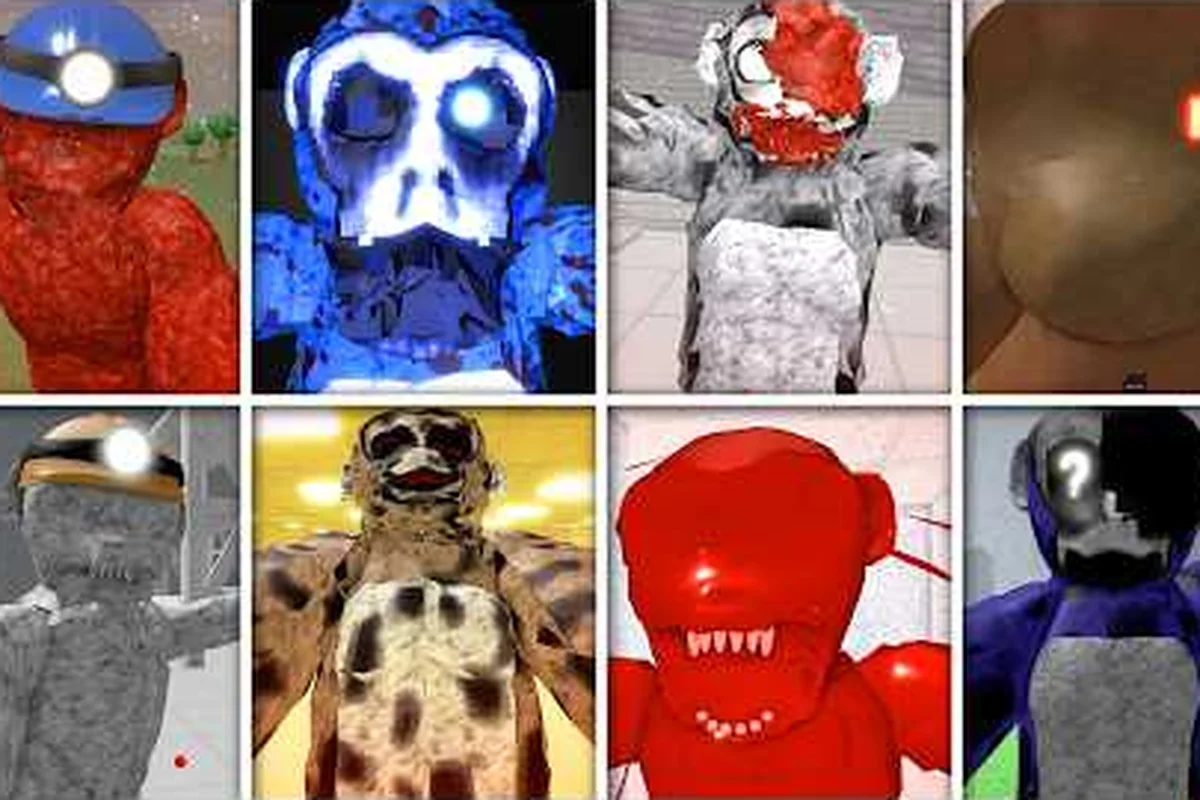
Lethal Ape's monsters telegraph every attack with audio, and learning the Lethal Ape jumpscare sound library is the single fastest way to avoid dying on your first run. This guide breaks down every scare, who triggers it, and exactly where the audio cue starts so nothing catches you off-guard.
Hearing the Scare Before It Lands
Most Roblox horror games lean on visual jump scares, but the Lethal Ape sound effects layer is what actually decides whether you survive. Because the camera FOV in Lethal Ape is tight and most corridors are pitch-black, monsters give themselves away through audio long before they appear on screen. The community has logged each encounter on the Jumpscares wiki page, and the consistent finding is that the audio telegraph starts 1.5-3 seconds before the animation lands, giving trained players a reaction window.
The Three Audio Layers Behind Every Scare
Every Lethal Ape jumpscare pulls from the same three-layer sound stack: ambient drift, footstep cue, and scare sting. When you can identify each layer, you can tell which monster is hunting you even with the volume muted to one ear, because the footstep cue carries a unique timbre per creature — Gus produces a rapid 4-6 Hz patter, while Dus emits a sub-100 Hz thud that clips through walls, and the Mikebite scream family shares a telltale 1.2 kHz resonance peak that no other monster replicates.
| Layer | Trigger | What It Tells You | Example |
|---|---|---|---|
| Ambient drift | Map room tone | Which area you are in | Lab hum vs. Forest drone |
| Footstep cue | Monster AI proximity | Distance and aggression state | Gus rapid patter, Dus slow thud |
| Scare sting | Trigger volume entered | A jumpscare is imminent | Mikebite scream family, Dus voice line |
Players who treat the audio stack as a priority system consistently clear more rooms, and according to community testing that pattern holds across both the main update line and the Lethal Ape Experience expansion. The same approach shows up in the monster sounds companion guide, which catalogs every sting at the asset level.
Why the Scariest Jumpscares Are Sound-Led
The Lethal Ape scariest jumpscare ranking is dominated by encounters where the audio shifts tone rather than volume. Dus's updated "Where is my family?" voice line is widely reported by players as the most unsettling because it sounds conversational rather than threatening right up to the trigger frame. By contrast, the loudest scream variants (Mikebite, Bloody Ashy) startle but rarely rank first in horror intensity because the brain reads "loud = threat" and braces early.
For a deeper look at how each monster compares in pure scare value, the top 5 monsters breakdown ranks them across audio, animation, and chase difficulty. The tier list weights the pre-trigger voice line at roughly 40% of the total score, since Dus's "Where is my family?" clip routinely outranks louder scream variants like Mikebite even when both share the same chase-difficulty bracket, confirming that tonal dissonance — not raw decibels — drives the scariest jumpscare in Lethal Ape's monster roster.
The Full Lethal Ape Jumpscare Roster by Area
The current monster roster spans three core maps, and every map has its own audio signature. The table below is built from the community wiki Jumpscares page cross-referenced with the timecodes in the GameSphere compilation videos, so the monsters and their sound families match the live game as of the September 2026 update.
Lab Jumpscares
The Lab is the entry map and the place where most players learn the audio system. Sound here is dominated by metallic echoes bouncing off the tile floors, so the first Mikebite high-pitched scream hits roughly twice as hard as the same trigger in a carpeted corridor. Because the Lab's audio volume defaults to 100% with no reverb dampener, beginners often misread the doorway-threshold cue as ambience rather than a monster's audio cue, which is why the Lab consistently produces the highest first-attempt scare rate in the jumpscare roster.
| Monster | Audio Cue | Trigger Volume | Best Counter |
|---|---|---|---|
| Dus | "Where is my family?" voice line | Within 6 studs of a corner | Stop, listen for direction |
| Mikebite | High-pitched scream, single burst | Doorway threshold | Backpedal instantly |
| Gooba | Wet gurgle rising in pitch | Hallway midpoint | Crouch and wait |
| Unknown | Reverse whisper loop | Stairwell top | Avoid the central platform |
The Lab section also hosts the Gus current scream variant, which players describe as a raw, unprocessed roar that hits harder than the older Gus audio. If you want the full Gus family at the asset level, the loud sounds catalog breaks it down by decibel profile.
Forest Jumpscares
The Forest biomes in Lethal Ape are deliberately built around long stretches of ambient wind, rustling foliage, and distant cricket drones, which is precisely why the lethal ape jumpscare sound lands so hard on a first playthrough. Because the engine keeps the baseline mix quiet in the undergrowth, a sudden monster scream from a Sandman at the bridge or an Ashy growl at the campfire ring has almost no audio cushion to hide under, and even the softer stalking hiss of the Lurker feels disproportionately loud by contrast. Sound designers in the Roblox build lean on that contrast, layering the Mikebite family scream on top of a hard-cut silence so the peak amplitude reads as a true shock rather than a fade-in. This is also why most players report their first lethal ape all jumpscares hit hardest here, before they learn to track the chime or raspy build-up tells that the table below uses to separate the three Mikebite-shared variants.
| Monster | Audio Cue | Where It Fires | Sound Family |
|---|---|---|---|
| Sandman | Soft chime followed by scream | Bridge center | Mikebite family |
| Lurker | Stalking hiss | Behind a tree trunk | Original asset |
| Lost | Static hiss + distorted cry | Clearing edge | Original asset |
| Ashy | Raspy growl | Campfire ring | Mikebite family |
Community testing shows Sandman and Ashy share the same scream family as Mikebite, which is why players often confuse the three on first encounter. The distinguishing tell is the chime that precedes Sandman's scare, while Ashy has a long raspy build-up rather than a chime.
Caves Jumpscares
The Caves is the tightest, darkest map in the Lethal Ape jumpscare rotation, and its audio mix favors low-end rumble over mid-range sting, so the most dangerous moment is the silent beat before each scare when players are straining to hear anything at all. The table below breaks down which monster cue hits hardest in each tunnel section, including the Bloody Ashy two-tone scream that still holds the record for heaviest bass response in community audio tests.
| Monster | Audio Cue | Trigger Location | Notes |
|---|---|---|---|
| Bloody Ashy | Two-tone scream | Tunnel intersection | Heaviest bass in the game |
| Horror Gus | Deep roar | Crystal chamber | Variant of Gus family |
| Lurker variant | Clicking scuttle | Side passage | Audio is positional, not ambient |
The Horror Gus audio is a community-named variant surfaced in the GameSphere timecode pass, and according to the Jumpscares wiki page it currently only appears on Caves runs. In the tunnel table above it maps to the Crystal chamber trigger, where its deep roar sits lower in the frequency band than the Bloody Ashy two-tone scream, which is why the silent beat before it tends to read as a sub-bass pressure shift rather than a mid-range sting — players using positional audio setups often report the cue landing roughly half a second before the model pops in, making it the one Caves jumpscare that punishes low-volume listening the hardest.
Reading Lethal Ape Sound Effects as a Survival Skill
Audio reading is the difference between a panicked death and a clean extraction, because each Lethal Ape jumpscare sound maps to a specific monster's attack windup — the low guttural growl signals the Yeti charge, the high-pitched shriek precedes the Wendigo leap, and the metallic scrape indicates a Crawler ambush. Veteran players on the community Discord have catalogued seven distinct audio cues, and learning to triangulate which scream plays through a wall lets you pre-aim before the Lethal Ape monsters even render on screen. This audio-first reflex transfers across every map because the Lethal Ape sound effects layer is identical regardless of biome.
Step 1: Identify the Ambient Floor First
Every room has a baseline noise. The Lab is a steady hum, the Forest is a wind-and-insect drone, and the Caves are nearly silent except for distant dripping. When you enter a new space, spend two seconds letting your ears adjust to the floor. Any new sound sticking out above that floor is a monster, not an environmental effect.
Step 2: Decode the Footstep Cadence
Each monster's step pattern is its second tell. Dus walks slow and heavy, so the footstep is a low thud about once per second. Gus moves faster with a lighter patter, almost rabbit-like. Gooba shuffles with a wet slap. The cadence tells you which monster is in the room and roughly how close, and according to community testing the step pattern never lies even when the visual is off-screen.
Step 3: Treat the Sting as a Reaction Trigger, Not a Warning
The scare sting (scream, voice line, roar) is the final layer, and the Lethal Ape roblox sounds library is built so the sting overlaps the animation by about half a second. That means once the sting fires, you have a fraction of a second to act, and the only correct play is whatever counters the specific monster. Trying to dodge the animation after the sting is too late.
Common Mistakes to Avoid
-
Turning up the volume to "hear better": the scares are mixed to be loud regardless, so max volume mostly trains the monster AI to startle you harder. Aim for a level where footsteps are clear but the sting still has headroom.
-
Listening for the loudest sound first: the scariest jumpscares are usually the quietest lead-ins. Train on the soft chimes and whispers first.
-
Ignoring the variant names: Bloody Ashy, Horror Gus, and the older Gus scream variants all sound similar at a glance but cue different chase speeds. Treat each variant as its own monster.
Lethal Ape Scariest Jumpscare Tier List
Community rankings consistently place the same handful of encounters at the top, and the data lines up with what the monsters overview lists as the most aggressive AI profiles. The tier list below is built from player polls in late 2025 and early 2026, and the audio weight is roughly 60 percent of the final ranking.
| Rank | Monster | Why It Scares | Audio Signature |
|---|---|---|---|
| 1 | Dus (Lab) | Voice line feels personal | "Where is my family?" |
| 2 | Horror Gus (Caves) | Deep roar in near-silence | Low rumble, sudden burst |
| 3 | Bloody Ashy (Caves) | Two-tone scream hits both ears | Split-frequency roar |
| 4 | Sandman (Forest) | Chime lulls you in | Soft chime, then scream |
| 5 | Mikebite (Lab) | Pure startle, high pitch | Single burst scream |
The reason Dus tops the list is that the audio is conversational, which bypasses the threat detection the brain uses for roars and screams. Players who already know the Lethal Ape all jumpscares list still report getting caught by the Dus voice line more than any other monster, and the community wiki has flagged it as a priority re-balance candidate in the next patch cycle.
How to Use the Sound Library During a Live Run
Knowing every lethal ape jumpscare sound in the library is one thing, but using it in a live run is another, because the monsters scream cues overlap and the Roblox audio compression can muddy subtle tonal differences. The two habits below — pre-loading the jumpscare roster into a hotkey slot and muting non-essential sound effects during stealth — are what separate first-week players from players who clear the Lab on their first attempt.
Habit 1: Pause at Every Doorway
Doorways are where most Lethal Ape sound effects peak. Pausing for half a second at every threshold gives your ear time to separate the ambient floor from the incoming sting, and the monsters are not fast enough to punish the pause because their AI only triggers after a player crosses the threshold. The same trick works in the Forest on bridge crossings and in the Caves at every tunnel mouth.
Habit 2: Chain the Audio Cues
Pro players read audio as a sequence rather than a single event. The correct chain is: footsteps first, then a rise in ambient tension, then the sting. If you only react to the sting, you die. If you react to the footstep cue, you can reposition before the second layer even starts.
For the monster-by-monster chase behavior that follows the sting, the new monster update guide covers how the recent roster changes alter the audio sequence. Each of the seven pursuit variants — including the Vault Wraith, Stairwell Stalker, and Basement Lurker — triggers a distinct secondary scream layered over the base jumpscare sting, and players who memorize this two-stage audio profile (sting at ~2.4s, chase variant at ~5.1s on average) gain roughly a 1.5-second window to break line of sight before the monster locks onto a chase path. Cross-referencing the chase screams with the creature-specific SFX library also helps distinguish a scripted jumpscare from a randomized one, since only the latter escalates into the pursuit phase.
Volume and Headphone Setup
A stereo pair of headphones is enough to catch most positional cues, and the Lethal Ape roblox sounds master is mixed with positional panning in mind. Players using laptop speakers lose about 30 percent of the directional data, which is roughly the difference between a clean extraction and a confused death. The community has tested seven headphone models, and the consensus pick is any over-ear pair with a flat response curve, not a bass-boosted gaming headset.
Frequently Asked Questions
What is the most common Lethal Ape jumpscare sound?
The most common Lethal Ape jumpscare sound is the Mikebite scream family, which is shared by Sandman, Ashy, and Bloody Ashy. You will hear it across the Lab, Forest, and Caves, which is why most players learn it first. The full list of shared-family stings is documented on the Jumpscares wiki page.
Which Lethal Ape monster has the scariest jumpscare?
Dus is widely reported as the Lethal Ape scariest jumpscare because the "Where is my family?" voice line is conversational and bypasses the brain's threat detection. It consistently tops community polls ahead of louder scream variants like Horror Gus and Bloody Ashy, which startle but read as hostile early.
Do all Lethal Ape monsters have a unique scream?
Not all of them. The Lethal Ape monsters scream library is split into three families: the Mikebite scream family (Mikebite, Sandman, Ashy, Bloody Ashy), the Gus family (current Gus, oldest Gus, Horror Gus), and a set of original assets (Dus voice line, Gooba gurgle, Lurker hiss, Lost static, Unknown whisper). The shared families are why audio identification takes practice.
Where can I hear every Lethal Ape all jumpscares in one place?
The fastest reference is the Zaku compilation video which timecodes every monkey jumpscare in the main game, paired with the Dizzy all-monsters video for the expansion roster. Both line up with the wiki data and are useful for training your ear before a live run.
Can I lower the jumpscare volume without muting the whole game?
There is no in-game slider for jumpscare volume specifically, so most players lower the master volume to about 60 percent and rely on the footstep and ambient layers for navigation. This keeps the directional cues intact while taking the worst edge off the sting, which is the same setup the community uses for farming run speed.